
` Total Hip Replacement | Premium Joint Replacement & Sports Injury Clinic
Advanced Joint Replacement

Total Hip Replacement

Total Hip Replacement is a highly successful surgical procedure performed to alleviate chronic pain and restore mobility in individuals with severe hip joint damage.

Full

Joint Re-alignment

Elite

Surgical Precision

Optimal

Functional Restoration

Total Hip Replacement Main Interface Visual
Advanced Arthroplasty
Mobility Restoration
Clinical Identification of Hip Mechanics
Introduction

Total Hip Replacement Introduction

Total Hip Replacement is a highly effective procedure for individuals suffering from severe hip joint damage. This surgery aims to reduce pain, improve joint function, and restore a better quality of life for patients whose hip joints have been significantly affected by arthritis, injury, or other degenerative conditions.

By replacing the damaged ball-and-socket structure with durable artificial components, patients can return to active lifestyles with greatly enhanced mobility and minimal discomfort.

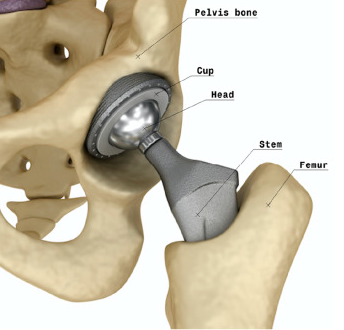
Anatomical Profile of Hip Replacement Components
Mechanism

What is Total Hip Replacement

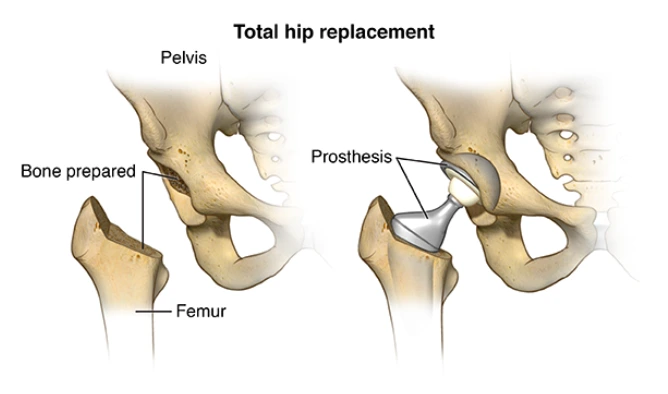
Total Hip Replacement, also known as total hip arthroplasty, involves removing the damaged bone and cartilage of the hip joint and replacing it with prosthetic components. The hip is a ball-and-socket joint; during surgery, the worn-out ball (the femoral head) and the damaged socket (the acetabulum) are replaced with smooth artificial surfaces.

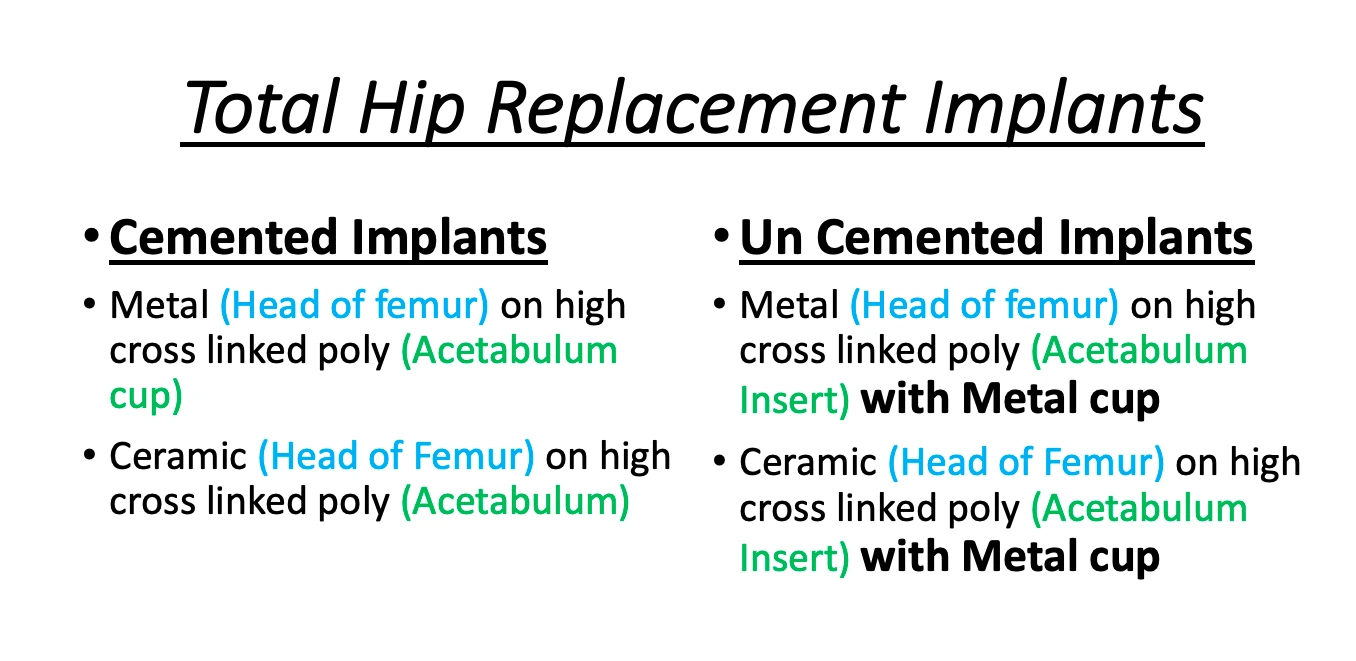
These implants are typically made of high-grade metal, ceramic, and durable polyethylene plastic, designed to mimic the smooth, low-friction movement of a healthy, natural joint.

Clinical Candidacy

Conditions Requiring Hip Replacement

Several progressive degenerative diseases and structural failures can lead to the necessity of a total hip joint reconstruction:

01

Osteoarthritis

The gradual wear-and-tear of cartilage that causes bones to rub directly against each other, leading to chronic stiffness and pain.

02

Rheumatoid Arthritis

An autoimmune condition where chronic inflammation thickens the joint lining, eventually destroying both cartilage and underlying bone.

03

Avascular Necrosis

A loss of blood supply to the femoral head, causing the bone structure to collapse and break down, resulting in severe joint failure.

Patient experiencing difficulty walking due to hip pain
Symptoms

Symptoms & Limitations

When hip deterioration progresses, it manifests through a variety of severe physical limitations that disrupt daily living:

  • Persistent pain in the hip or groin area that may worsen with activity
  • Stiffness that limits the range of motion, making it difficult to bend or lift the leg
  • Difficulty walking, climbing stairs, or getting in and out of chairs
  • Pain that disrupts sleep and does not respond adequately to medication or physical therapy
  • A noticeable limp or reliance on walking aids to move around
Diagnostic Architecture

Diagnosis & Evaluation

A thorough medical assessment is crucial to confirm joint breakdown and map out the surgical baseline before organizing a hip arthroplasty.

Clinical Examination

Physical Evaluation

A comprehensive examination evaluates joint range of motion, walking mechanics, muscle strength around the pelvic girdle, and specific pain patterns during active movement.

Imaging Assessment

Advanced Imaging

X-rays are primarily utilized to check for joint space narrowing, bone spurs, and structural alterations. In complex cases, MRI or CT scans may be used to assess bone quality or soft tissue integrity.

Surgical Dynamics

Biomechanical Presentation of Total Hip Joint Replacement

Watch this complete, professionally curated video presentation detailing the mechanical principles of total hip arthroplasty, demonstrating how the specialized prosthetic ball and socket components interface to re-establish regular joint alignment and provide smooth, pain-free mobility.

  • Acetabular cup preparation and positioning
  • Femoral stem placement and fixation stability
  • High-performance structural component longevity
Surgical Reconstruction and Component Integration Detail
The Operating Room

Total Hip Replacement Procedure

The procedure is typically performed under general anesthesia or spinal anesthesia. The surgeon makes an incision over the hip joint to access the damaged structures, selecting an approach that best minimizes muscle disruption based on individual anatomy.

The worn-out ball of the femur is removed, and the socket is hollowed out to accept a new durable liner. The artificial socket component is fixed into the pelvis, a metallic stem is placed inside the femur, and a precision ceramic or metal ball is attached to the stem. The components are checked for optimal alignment, stability, and smooth rotation before closing the incision.

Clinical Success

Benefits of Hip Replacement

Total hip joint reconstruction delivers profound structural improvements, returning patients to daily functions with renewed confidence:

Significant Pain Relief

Provides predictable, long-lasting reduction or complete elimination of severe, chronic hip pain caused by bone-on-bone friction.

Improved Mobility

Restores smooth joint articulation, enabling patients to walk, climb stairs, bend, and move comfortably without mechanical restriction.

Enhanced Quality of Life

Allows individuals to safely re-engage in recreational hobbies, sleep comfortably, and manage everyday activities independently.

Guided physical therapy session for post-operative hip recovery
Post-Op Protocol

Recovery & Rehabilitation

Rehabilitation begins almost immediately after surgery, with physical therapy starting as early as the first post-operative day. Early mobilization is highly encouraged to promote healthy circulation, prevent blood clots, and stimulate joint adaptation.

A structured exercise program focuses on progressively rebuilding muscle strength around the hip and restoring balance. Patients typically utilize a walker or crutches for the first few weeks, transitioning to independent walking as structural stability and muscle control improve. Most individuals achieve significant recovery milestones within 6 to 12 weeks.

Patient Resources

FAQs

Get clear, definitive answers to frequently encountered questions regarding Total Hip Replacement procedures.

Modern hip implants are manufactured using premium, highly wear-resistant materials. Clinical data shows that approximately 85% to 90% of modern total hip replacements continue to function exceptionally well for 15 to 20 years or longer, depending on the patient's activity level and overall joint care.
Most patients can safely resume driving within 4 to 6 weeks after surgery, provided they are no longer taking narcotic pain medications, have regained adequate muscle control, and can quickly press the pedals in an emergency. Your surgical team will provide specific clearance based on your progress.
Patients are advised to avoid high-impact activities such as running, jumping, or contact sports, which can place excessive stress on the artificial joint. Low-impact exercises like walking, swimming, cycling, and golfing are highly recommended to maintain long-term physical fitness.
Yes, completing a structured physical therapy and home exercise program is vital to ensure an optimal recovery. Regular physical therapy helps restore full joint mobility, builds up structural support in surrounding muscles, and safely trains your gait to prevent long-term limping.

Regain Smooth Joint Mobility and Live Free From Chronic Hip Pain

Consult with our elite joint reconstruction and orthopedic specialists to evaluate your hip health and explore whether Total Hip Replacement is the right path forward for you.