What is a rotator cuff tear?

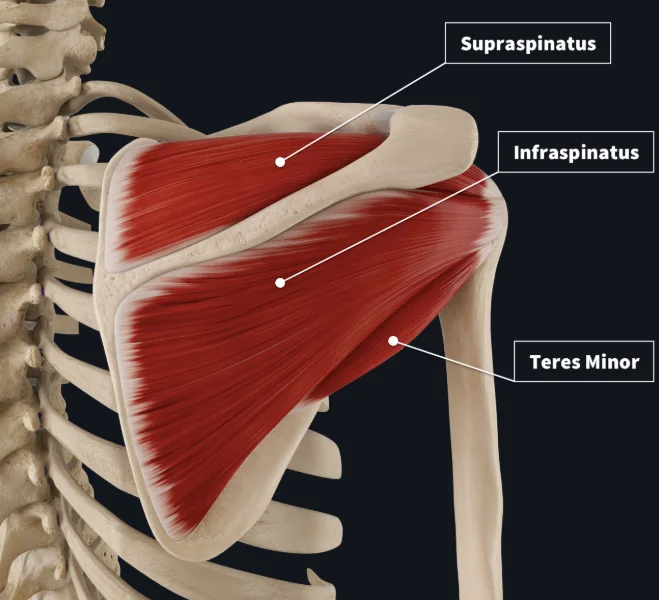
The Rotator cuff tendon is a group of four muscles :
  • Subscapularis muscle
  • Supraspinatus muscle
  • Infraspinatus muscle
  • Teres minor muscle

A rotator cuff tear is an injury to any of these four muscles individually or combined together. Injury causes shoulder pain and the inability to use your arm.

The key function of rotator cuff is to move the shoulder joint in front elevation, side lifting (abduction) and external and internal rotation of shoulder joint. In addition to providing shoulder moments, rotator cuff keeps the ball of your upper arm bone (Humerus) in the Glenoid (shoulder blade socket).

Shoulder joint is a ball-and-socket joint. It's like a golf ball sitting on a golf tee. Rotator cuff tears occur when tendons pull away from arm bone.

Types of rotator cuff tears?

Types of torn rotator cuffs include:

Partial

With an incomplete or partial tear, some part of tendon still attaches to your (humerus) arm bone

Complete

With a full-thickness or complete tear, tendon tears and separates completely from humerus bone.

How common are rotator cuff tears?

Rotator cuff tears affect people of all ages, but the problem is more common in adults and these tears are usually degenerative.
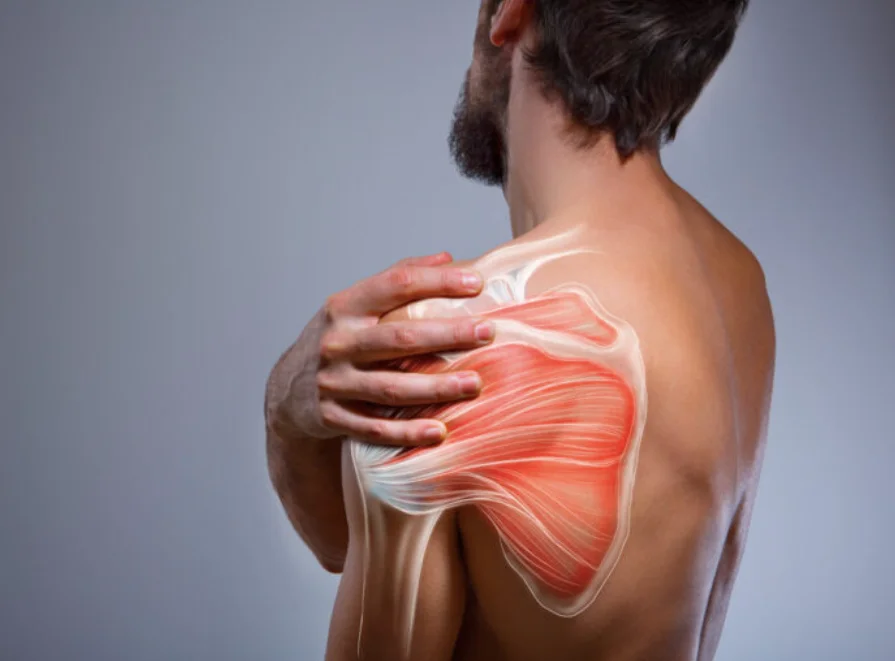
Patient exhibiting shoulder muscle discomfort

Symptoms

Rotator cuff tear symptoms include:
  • Difficulty, pain and weakness during shoulder elevation or during rotation of arm.
  • Clicking, crackling sounds or sensations when moving arm in different positions.
  • Shoulder pain can worsens at night or while resting.
  • Shoulder range of moments weakness especially in side elevation or forward elevation.

When to see a doctor

Seek immediate care if any injury to your knee causes signs or symptoms of an ACL injury. It is wise to get a prompt and accurate diagnosis to determine the severity of the injury and get proper treatment.

Some patients feel a dull ache deep within your shoulder, or it may feel like sudden sharp pain as if hit by a knife. Sudden tears from accidents or trauma cause immediate, intense shoulder pain and arm weakness. With degenerative tears, you may have mild pain that improves with pain killers. Over time, the pain gets worse, and pain relievers don't help. Few patients are without any pain, but most people have some degree of arm and shoulder weakness.
Rotator cuff tears can stem from progressive wear and strain over months of continuous work/athletics, or dynamic mechanical rupture from a hard direct landing accident.
Primary risk elements are advancing age (most notably seen over age 40), professional repetitive task lines (carpenters, painters), and inherited physical attributes.

Diagnosis

A physical exam is the first step to diagnosing rotator cuff injuries. During the exam, a healthcare professional will examine shoulder joint and move the arm into different positions and access the strength of the muscles around the shoulder joint.

Imaging tests also may help diagnose rotator cuff injuries. Imaging tests may include:

  • X-rays: Rotator cuff tear won't show up on an X-ray, this test can visualize bone spurs or an underlying causes for your pain, such as arthritis, calcific tendonitis etc
  • Ultrasound: This type of test uses sound waves to produce images of structures within your body, particularly soft tissues such as muscles and tendons. It helps in assessing the structures of your shoulder during movement. It also allows a quick comparison between the affected shoulder and the healthy shoulder.
  • Magnetic resonance imaging (MRI): This is best investigation tool which helps in visualizing rotator cuff in 3 Dimensional details. It tells us about the attachment points of rotator cuff muscle and the amount of retraction of torn muscle and quality of rotator cuff tendon.

The outcome of ACL injury can be that there is usually a partial or complete tear of the tissue. A mild injury may stretch the ligament but leave it intact which is ACL sprain.
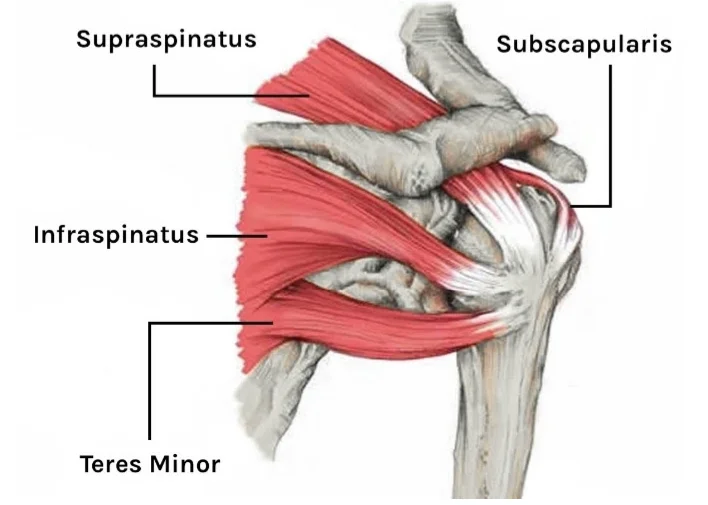
Structural muscle identification mapping diagram

Complications

Without treatment, rotator cuff problems may lead to permanent loss of motion or weakness of the shoulder joint and in long term it can lead to shoulder joint arthritis.

Management & Treatment

What is the treatment for a rotator cuff tear?

Rotator cuff tear treatment may include nonsurgical and surgical options.

Subscapularis anatomical structure perspective illustration

Nonsurgical Options

Rotator cuff tears don't heal on their own without surgery, but many people can improve functionally and decrease pain with nonsurgical treatment by strengthening their shoulder muscles. Just because you have a tear doesn't necessarily mean you need surgery, as many people have rotator cuff tears and don't even know it. About 8 out of 10 people with partial tears get better with nonsurgical treatments. It can take up to a year for the condition to improve.

Nonsurgical treatments include:

  • Shoulder Immobilizer/ Adduction Brace or an arm sling to give rest to shoulder joint in order to heal. One has to stop activities that causes pain and take rest from sports or work if that involves shoulder moments
  • NSAIDs (Non-Steroidal anti-inflammatory drugs)/ Painkillers to reduce pain and swelling.
  • Physical therapy to learn strengthening and stretching exercises.
  • Training to improve technique while pivoting and cutting movements

Treatment

Conservative treatments — such as rest, ice, brace followed by physical therapy is usually enough to recover from minor rotator cuff injury. In case injury is severe and rotator cuff tear is complete or high grade tear then conservative or non-operative methods might not be able to heal torn rotator cuff tissue and an arthroscopic surgery might be needed to repair the rotator cuff tissue.


Therapy

Physical therapy is usually one of the first treatments suggested. Exercises tailored to the specific location of your rotator cuff injury can help restore flexibility and strength to your shoulder. Physical therapy also is an important part of the recovery process after rotator cuff surgery.


Injections

An injection into the shoulder joint might be helpful. Injections are especially helpful if the pain is interfering with sleep, daily activities or physical therapy. While such shots often provide temporarily relief, they also can weaken the tendon and reduce the success of future shoulder surgery.


Surgery

Arthroscopic rotator cuff repair

Many different types of surgeries are available for rotator cuff injuries, including:

  • Arthroscopic tendon repair: In this procedure, surgeons insert a tiny camera, called an arthroscope, and tools through small incisions. These tools are used to reattach the torn tendon to the bone.
  • Tendon transfer: If the torn tendon is too damaged to be reattached to the arm bone, surgeons may decide to use a nearby tendon as a replacement.
  • Artificial synthetic tendon patch or Fascia Graft : Artifical synthetic patch can be used to reinforce the repair the rotator cuff tear so adequate healing also it can be used to fill up gap in cases where rotator cuff cannot be repaired back to foot print so when there is significant gap in repair tissue. Autologous (own body) Tensor Fascia Latae (TFL) patch can be used instead of synthetic patch to fill the gap in repair or to repair the irreparable and retracted rotator cuff tissue back to its original attachment.
  • Reverse Shoulder replacement: Massive rotator cuff injuries may require shoulder replacement surgery. Reverse shoulder arthroplasty, can improve the artificial joint's stability. Reverse shoulder arthroplasty installs the ball part of the artificial joint onto the shoulder blade and the socket part onto the arm bone. It is usually done in a massively retracted and irreparable rotator cuff tissue with an underlying shoulder joint arthritis.

What is the rotator cuff tear recovery time?

After surgery, you need to wear a sling to immobilize your arm for four to six weeks. You can then start physical therapy. Most people regain shoulder function and strength within four to six months after surgery, but full recovery may take up to 10-12 months.

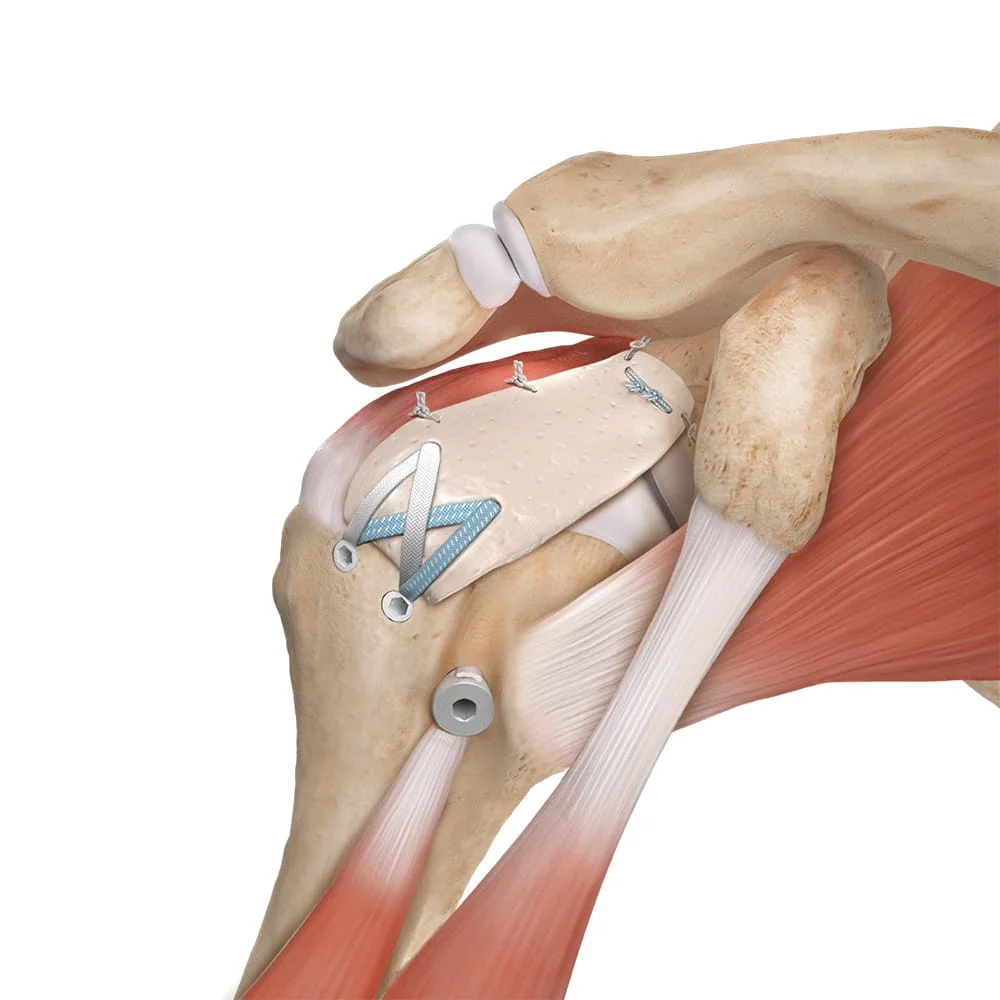
Surgeons executing arthroscopic repairs under medical camera tracking systems Digital layout detail pointing to anchor anchors and structural wire suture tracking hooks
Completed anchor point reconstruction modeling detail

Prevention

How can I prevent a symptomatic rotator cuff tear?

To prevent a rotator cuff tear, it’s important to keep your muscles and tendons flexible. Your sports injuries specialist doctor can teach you strengthening and stretching exercises to do at home.
When should I consult the doctor ?

If you experience:
  • Chronic shoulder and arm pain.
  • Pain that worsens at night or interferes with sleep.
  • Redness, swelling or tenderness in your shoulder joint area.
  • Shoulder or arm weakness.

Conclusive note

If you’re an athlete or have a physical job, a rotator cuff injury might incapacitate your shoulder joint, but it doesn’t have to be the end of your career. Talk to your healthcare provider about the best treatment options, whether nonsurgical or surgical. Your shoulder may be weak and painful for some time initially, but it’ll eventually heal.