
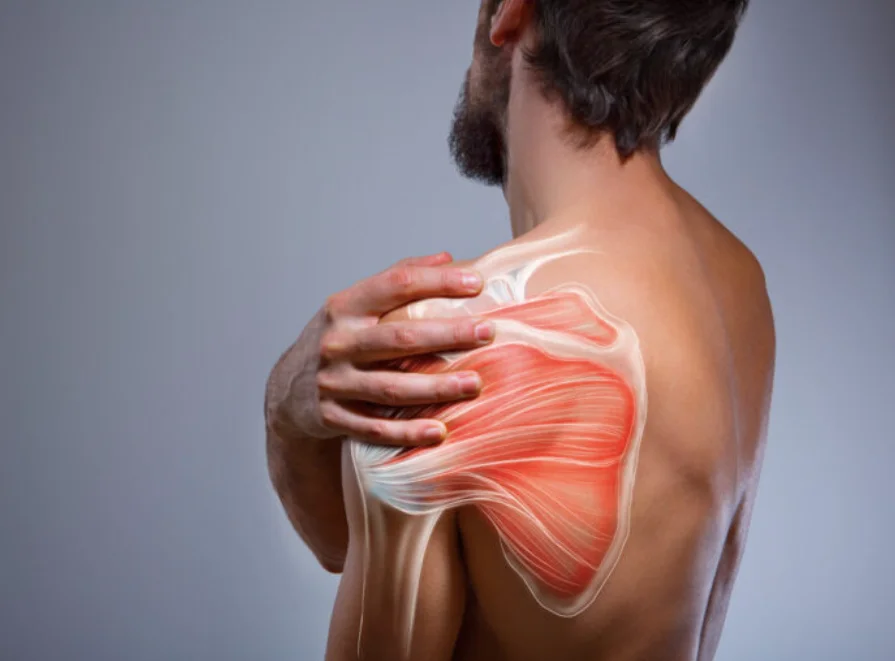
Frozen shoulder, also called adhesive capsulitis, is a condition involving pain and stiffness in shoulder joint. Symptoms usually start slowly and progress to get worsen over time. After one year symptoms typically get better. The risk for developing frozen shoulder increases if shoulder is kept still for a long time.
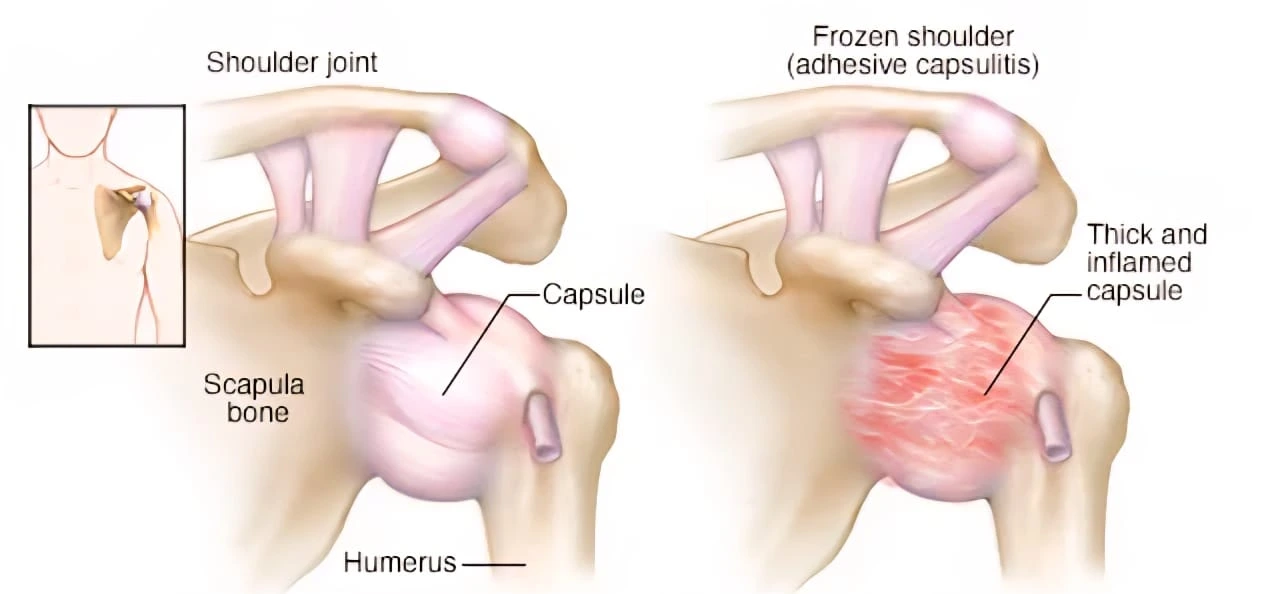
Frozen shoulder (adhesive capsulitis) occurs when the strong connective tissue surrounding your shoulder joint (called the shoulder joint capsule) becomes thick, stiff and inflamed.
What is frozen shoulder?
Frozen shoulder is a painful condition in which your shoulder movement becomes limited.
Frozen shoulder occurs when the shoulder joint capsule (strong connective tissue surrounding shoulder Joint) becomes thick, stiff and inflamed. The joint capsule firmly holding the shoulder joint in place.
Lack of use causes shoulder capsule to thicken and become tight, making shoulder even more difficult to move — it's "frozen" in its position.
Symptoms
-
✔
The "freezing" stage: In this stage, shoulder becomes stiff and is painful to move. The pain slowly increases. It may worsen at night. Inability to move shoulder increases. This stage lasts from six weeks to nine months.
-
✔
The "frozen" stage: In this stage, pain may lessen, but your shoulder remains stiff. This makes it more difficult to complete daily tasks and activities. This stage lasts for two to six months.
-
✔
The "thawing" (recovery) stage: In this stage, pain lessens, and your ability to move your shoulder slowly improves. Full or near full recovery occurs as typical strength and motion return. The stage lasts from six months to two years.
The exact reason of why frozen shoulder develops is still not known. The condition occurs when inflammation causes the shoulder joint capsule to thicken and tighten. The thick bands of scar tissue called adhesions develop over time along with less synovial fluid to keep shoulder joint lubricated. This makes it more difficult for shoulder to move and rotate properly.
Risk factors include individuals aged 40 to 60, individuals with systemic diseases such as diabetes, thyroid imbalances, or cardiovascular conditions, and anyone undergoing prolonged shoulder immobility due to stroke, surgery recovery, or rotator cuff injury rehabilitation processes.
Diagnosis & Tests
To diagnose frozen shoulder (adhesive capsulitis), Orthopaedics surgeon will discuss your symptoms and review your medical history followed by clinical examination of shoulder joint.
-
✔
Shoulder x-rays
-
✔
MRI scan
Management & Treatment
Frozen shoulder treatment usually involves pain relief methods until the initial phase passes. You may need therapy or surgery to regain motion if it doesn't return on its own.
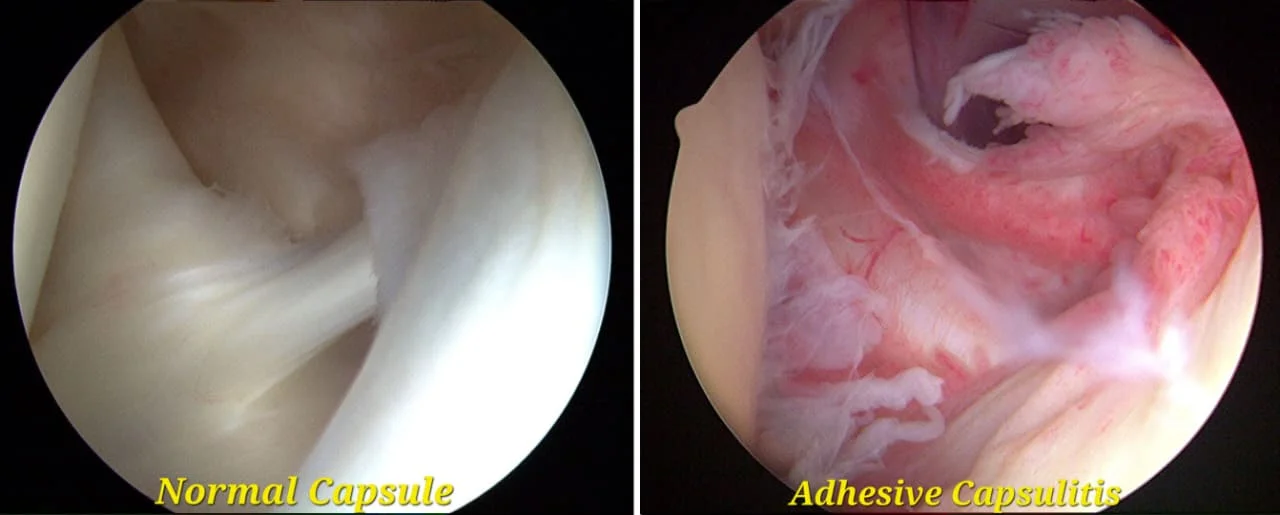
Normal Capsule

Adhesive Capsulitis
Some simple adhesive capsulitis treatments include:
-
✔
Hot & cold compresses These help reduce pain and swelling.
-
✔
Medicines that reduce pain and swelling. These include NSAIDS (Non Steroidal anti Inflammatory drugs)
-
✔
In severe pain and swelling with steroids injections can be injected into shoulder joint.
-
✔
Physical therapy A Physiotherapist can teach you stretching and range-of-motion exercises.
-
✔
Home exercise program Physiotherapist or Orthopaedics surgeon can guide exercises which you can do at home.
-
✔
IFT or TENS can be done which can reduce pain and stiffness of shoulder joint.
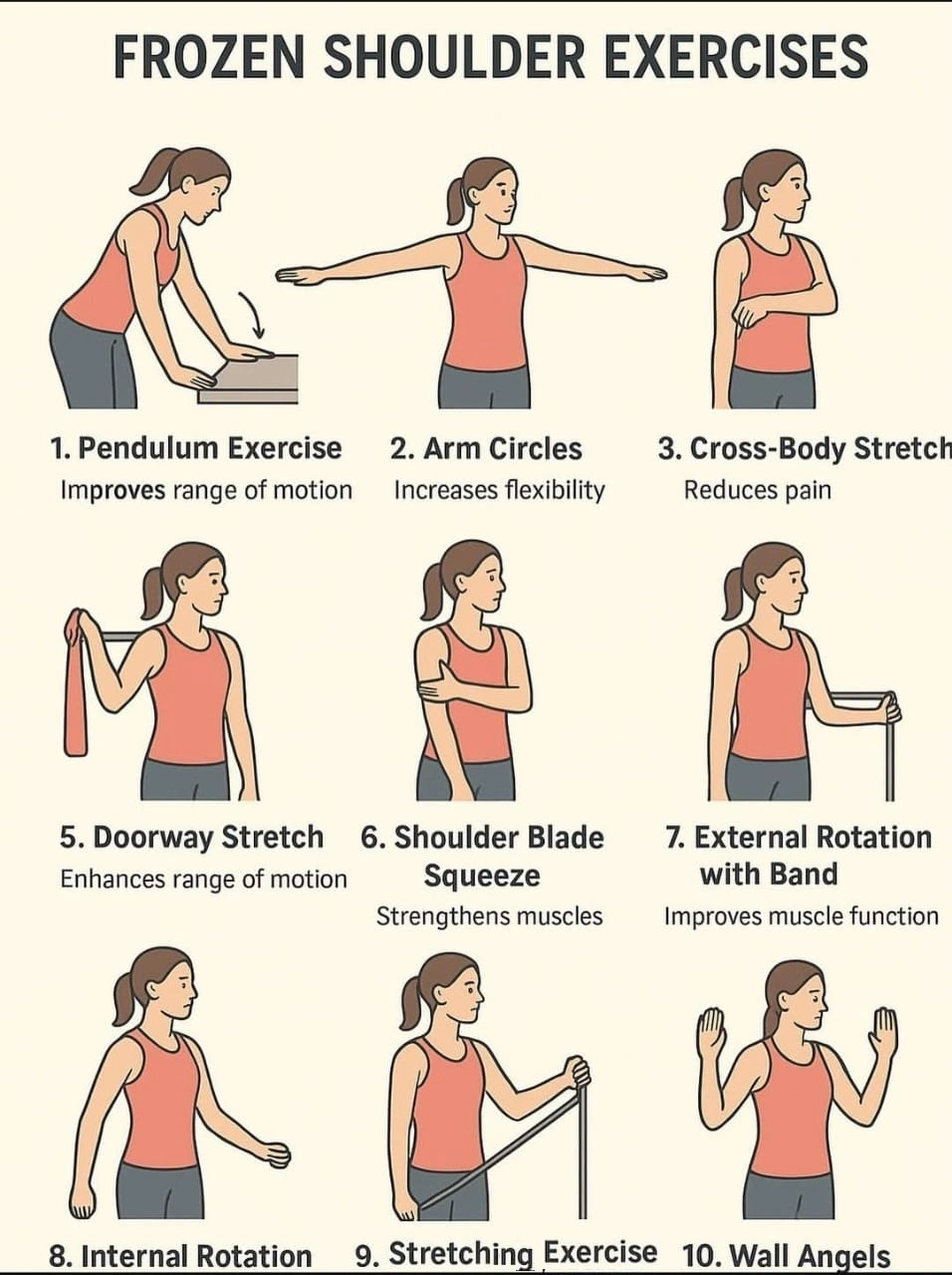
If these non-invasive treatments haven't relieved your pain and shoulder stiffness even after 6months, then doctor may recommend procedures.
-
✔
Manipulation under anesthesia: During this surgery, you'll be put to sleep and your provider will force movement of your shoulder. This will cause your joint capsule to stretch or tear to loosen the tightness. This may increase in shoulder range of motion.
-
✔
Shoulder Arthroscopic capsular release: This is the final and sure shot procedure after which patient regains full range of moments. It is carried out through two tiny incisions. From one incision camera is inserted into shoulder joint and through other incision radiofrequency ablation device is to be inserted and a capsular release is performed by releasing through tightest part of capsule.
Orthopaedics surgeon trained in shoulder surgeries often use these two procedures together to get better results.
Prevention
You can reduce your risk of frozen shoulder if you start physical therapy shortly after any shoulder injury in which shoulder movement is painful or difficult. Orthopaedic surgeon or physical therapist can develop an exercise program to meet your specific needs.